
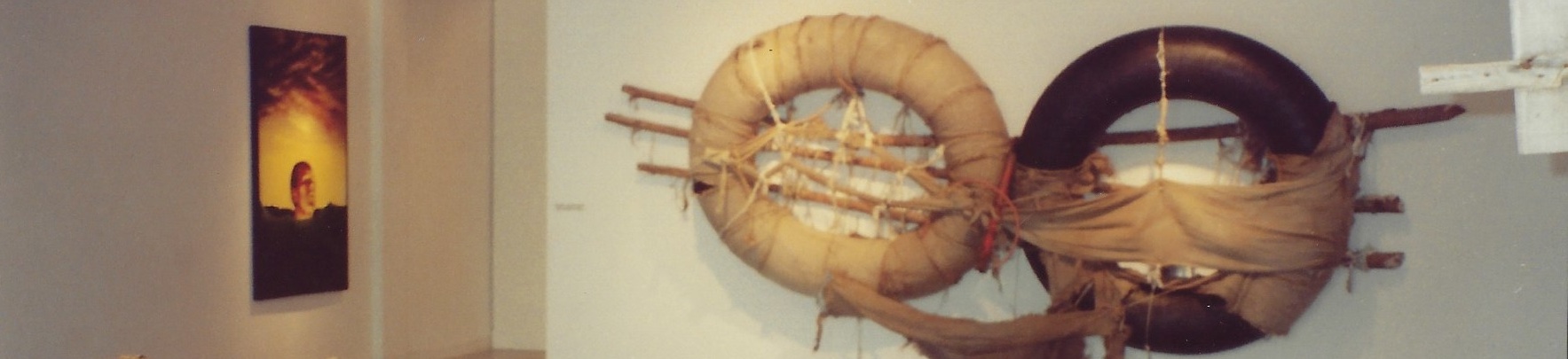
Image courtesy of the Fredric Snitzer Gallery
ART, RELIC, OR REFUSE? THE ABJECT EXHIBITION OF THE CUBAN RAFT AND ITS LITERARY AFTERLIFE IN THE FICTION OF ACHY OBEJAS
In Latino Studies, vol. 22, no. 4, 2024. Read-only version here (available for free). Download here (with institutional or individual subscription).
Abstract
This article attends to the objects drifting in the wake of Cuban sea migrations and to the figure of the raft collector who attempts to preserve them. I examine the abject and “makeshift” aesthetics of the raft itself and the public exhibitions during the 1990s that revealed their fraught status as found art objects, maritime refuse, and relics of the dead. From there, I explore connections between the presentation of the rafts in art exhibitions and their re-presentation in literary work by Cuban American writer Achy Obejas. Ultimately, I argue that the rafts’ failed potential as sites of public memorial results from their abject proximity to death, which threatens the preexisting social order of the exile community. I suggest that Obejas’s fiction rewrites the fraught history of the Cuban raft through an act of literary memorial that harnesses abjection’s creative possibility.
Resumen
Este artículo atiende los objetos que flotan en la estela de las migraciones cubanas por mar y a la figura del coleccionista de balsas que intenta preservarlos. Examino la estética abyecta e improvisada de la balsa en sí y las exhibiciones públicas durante la década de 1990 que revelaron su difícil condición como objetos de arte encontrados, desechos marítimos y reliquias de los muertos. De ahí paso a explorar las conexiones entre la presentación de las balsas en exposiciones de arte y su subsiguiente presentación en la obra literaria de la escritora cubana Achy Obejas. Por último, argumento que el potencial fallido de las balsas como monumentos públicos es producto de su proximidad abyecta a la muerte, que amenaza el orden social preexistente de la comunidad exiliada. Sugiero que la ficción de Obejas rescribe la tensa historia de las balsas cubanas en un acto de conmemoración literaria que aprovecha la posibilidad creativa de la abyección.
 Natalie Catasús